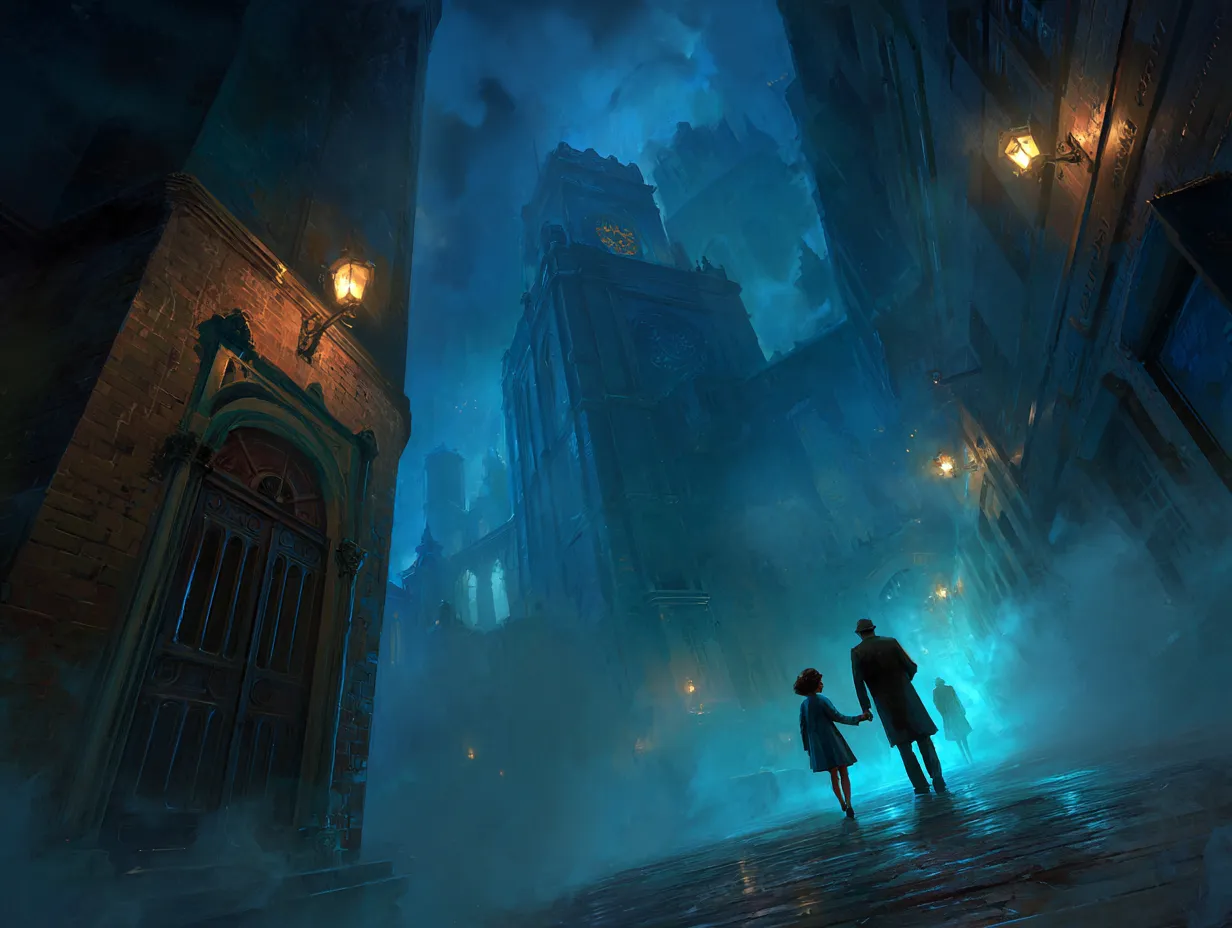
Crime & Detective
Follow the clues, question the suspects and close the case your way.
Mystery
Locked rooms, missing days and secrets everyone seems to share – except you. In StoryZone you don't pick from preset answers – you write what you examine, who you question and what you suspect, and the AI turns it into the next chapter.
Start your story for freeNew artwork coming soon
No preset answers
This is what a move can look like – short or long, combined however you like. The AI writes the next chapter from exactly your words.
The housekeeper swears the library has been locked since the funeral. Yet the mantel clock has been wound, the teacup on the desk is still warm, and someone has turned every portrait to face the wall – every one except your grandfather's. Beside it lies his ring of keys. Twelve of them. This morning you counted thirteen. Downstairs, someone closes the front door very, very softly.
Your move
I turn my grandfather's portrait around as well and run my thumb along the back of the frame, feeling for a hidden keyhole.
"Mrs Hale, you told me the room was locked. You never told me who had the key."
An interactive mystery story is a puzzle you solve by writing it. The AI sets the scene – a library locked since the funeral, a village missing the same Tuesday, a letter that predicts the week – and then the move is yours. Nobody lines up three suspects for you to tap on. You write what your character examines, who they question and what they suspect, in your own words. Search the back of a portrait, bluff that you already know everything, or say nothing and watch who gets nervous: the next chapter grows from exactly that.
Mystery here means secrets and riddles rather than ghosts. The answer is usually human and hidden in plain sight; if you want the paranormal, add supernatural as a second genre.
A good mystery plays fair. Every alibi, overheard remark and torn ticket stub lands in the story’s memory, so a detail from chapter 2 can still crack the case in chapter 30. With long-term memory you can read through it like a case file and add your own notes and theories.
Because there are no preset lines, you can question people the way a real sleuth would: lie to them, set a trap, compare two witnesses’ accounts or leave a silence they feel they have to fill.
Try a trap instead of a question. Do: “I leave the key on the hall table and announce that I’m going to bed.” Plot: “From the top of the stairs, I watch who comes for it.”
If a chapter gives the solution away too soon, rate it with a thumbs down and say why – the story adjusts.
Start with a single odd detail and let the questions pile up. Deep mode suits slow, careful investigation with room for atmosphere. When a case is closed, open a new season: same village, new secret, every old grudge still remembered. Mix mystery with romance for a suspect you shouldn’t trust, with historical for a puzzle by gaslight in a crumbling manor, or with crime when a secret turns into a case.
Take one of these ideas as your starting situation – or let the chameleon suggest one in the app.
Everyone in the village has lost the same Tuesday from their memory – everyone except you.
The hotel you're staying in has no room 14. Tonight its key was waiting for you at reception.
Your late aunt kept two diaries. The second describes a life you never knew she lived – and mentions you on the last page.
Every Sunday a letter arrives that predicts exactly what will happen in the week ahead. This Sunday's letter is blank.
Follow the clues, question the suspects and close the case your way.

Ghosts, curses and powers that don't follow the rules.

High stakes, little time – every choice can be the wrong one.
Crime stories follow a case and its investigation – detectives, evidence, a culprit. Mystery is broader: secrets, riddles and the unexplained, with or without a crime. Want an official case? Choose crime and detective. Want a question that won't let you go? Choose mystery.
A gentle puzzle: a small community, an amateur sleuth, plenty of tea and gossip, and no graphic violence. Choose mystery, describe the cosy tone you want – a bakery, a seaside village, a nosy cat – and pick Casual mode for lighter chapters.
The story's memory keeps track of every clue, alibi and contradiction you uncover, so later chapters build on what you found instead of forgetting it. With long-term memory you can read it like a case file and add your own notes.
Get StoryZone on your phone, pick a world or create your own, and read the first chapter in a minute.
Free to download. Stars for chapters, with free ways to earn them.