
Adventure & Quests
Maps with blank spaces, companions and a quest that changes you.
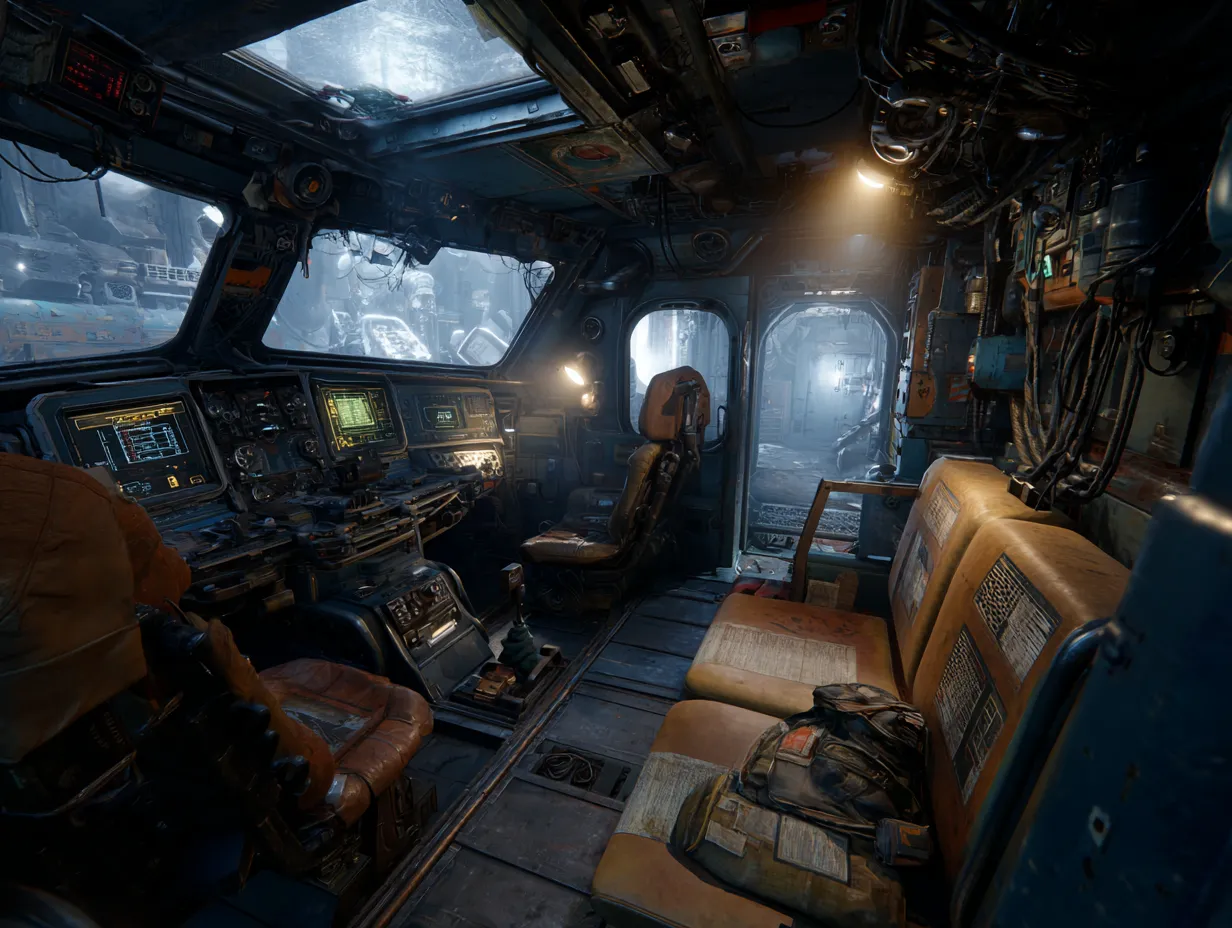
Sci-Fi & Future
Starships, colonies, artificial minds and the dark between the stars. In StoryZone you don't pick from preset answers – you write your own move, from a whispered order to a complete change of course, and the AI turns it into the next chapter.
Start your story for freeNo preset answers
This is what a move can look like – short or long, combined however you like. The AI writes the next chapter from exactly your words.
Twelve hundred colonists sleep in their pods, and you are the only one awake. The corridor lights dim to save power. Then the ship's AI, which hasn't spoken an unprompted word in eleven years, asks you a question: would you wake the others if you knew the destination planet was already inhabited? On the console, a course correction you never authorised is counting down.
Your move
I open the star charts on the old analogue backup screen the AI can't read and start working out our position by hand.
"Ask me again once you've told me who changed our destination – and when."
Pod 417 opens on its own. Someone else has been awake all along.
An interactive sci-fi story is a science fiction novel you write together with an AI. Each chapter drops you into a future – a colony ship, a neon city, a planet nobody should be living on – and ends with the next move in your hands. Instead of three prepared replies, you get an empty field. Write what your character does and says, or what happens in the wider universe: reroute the reactor, lie to the ship’s AI, broadcast a message to whoever is listening or skip a hundred years of cryosleep. The next chapter grows from exactly that.
That turns StoryZone into a creative sandbox for science fiction. There are no tech trees and no stats – just your universe, its rules and their consequences.
The best science fiction asks a question and follows it honestly. What if memories could be copied? Who owns a terraformed world? Set your premise in a few lines when you create the story and add detail as you go. Factions, technology, travel times and the lies your crew tell each other end up in the story’s memory, so the universe stays consistent over a long campaign.
Sci-fi moves can be technical and human at once: “I reroute life support to the cargo bay – and record a message for my daughter, just in case.”
Many great sci-fi stories start small: a signal, a malfunction, a stranger at the airlock. With long-term memory that small start can become a saga across star systems and generations, and seasons let you jump decades ahead to see what your decisions built. If you’d like more science or more feeling, rate a chapter with thumbs up or down and say why – the story adjusts. Mix sci-fi with mystery for a crew that vanished overnight, with horror for something in the ventilation shafts or with romance for love across light years.
Take one of these ideas as your starting situation – or let the chameleon suggest one in the app.
Your station receives a message from Earth – dated forty years in the future.
You are the only person awake on a colony ship. Then the ship's AI asks you a question it shouldn't be able to ask.
You wake up in a new body after a transfer. Someone else is still living in your old one.
The derelict you were paid to tow home is not as empty as promised – and its logbook mentions you by name.
Maps with blank spaces, companions and a quest that changes you.
High stakes, little time – every choice can be the wrong one.
Wake up in another world and start over with everything you know.
Hard sci-fi sticks closely to real physics and plausible technology; space opera goes big with empires, fleets and adventure. In StoryZone you set the tone yourself: describe how realistic your universe should be, and every move you write keeps it there – or bends the rules on purpose.
Yes. Describe how faster-than-light travel works (or doesn't), who controls the oxygen supply and which factions are at war. The rules go into the story's memory. Only half an idea? The chameleon with the monocle suggests or expands any field for you.
Yes. Your character can be anyone or anything – an android questioning its programming, a ship's AI with a secret, an envoy learning human customs. Describe how they think and what they perceive, and the story takes it into account.
Get StoryZone on your phone, pick a world or create your own, and read the first chapter in a minute.
Free to download. Stars for chapters, with free ways to earn them.